How to Calculate PCR Mastermix Volumes Accurately (Without Last-Tube Panic)
Your run does not fail at cycle 35. It often fails at minute three, when mastermix math is rushed and one well gets short volume. If you have ever watched the last PCR tube come up dry, this guide is for you.
3 SEO Title Options You Can Test
- 7 PCR Mastermix Math Mistakes That Waste Reagents (And How to Stop Them)
- 2026 Bench Guide: 9 Steps to Error-Proof PCR Mastermix Calculations
- PCR Mastermix Calculator Workflow: 5 Habits That Cut Reruns Fast
3 Personal Bench Stories That Changed My Workflow
1) The Last Tube Was Short
I once prepared exactly 24 reactions for a 24-sample run. Tube 24 was underfilled because of tip retention and dead volume. Since then, I always apply N+1.
2) The Decimal Shift Disaster
A teammate entered 0.05 instead of 0.5 uL for enzyme in a copied sheet. The plate looked normal until gel readout came back inconsistent. We moved all prep to a locked template and added a second check.
3) The "Looks Fine" Mix That Was Not Fine
Another run failed because I added enzyme before full buffer homogenization. Replicates drifted even though cycling conditions were unchanged. Now I always add water first, enzyme last, and mix gently.
Pro Tip: Manual pipetting always loses a little liquid. Plan for loss before it happens, not after it shows up in your final wells.
Practical Mastermix Table (Snippet-Friendly)
| Component | Per Reaction (uL) | 11-Reaction Mix for 10 Samples | Why It Matters |
|---|---|---|---|
| Water | 15.5 | 170.5 | Balances final reaction volume |
| 10x Buffer | 2.5 | 27.5 | Keeps ionic strength stable |
| dNTP Mix (10 mM) | 0.5 | 5.5 | Supports full extension |
| Forward Primer | 1.0 | 11.0 | Target specificity |
| Reverse Primer | 1.0 | 11.0 | Target specificity |
| Taq Polymerase | 0.5 | 5.5 | Amplification engine |
Fast Workflow That Prevents Reruns
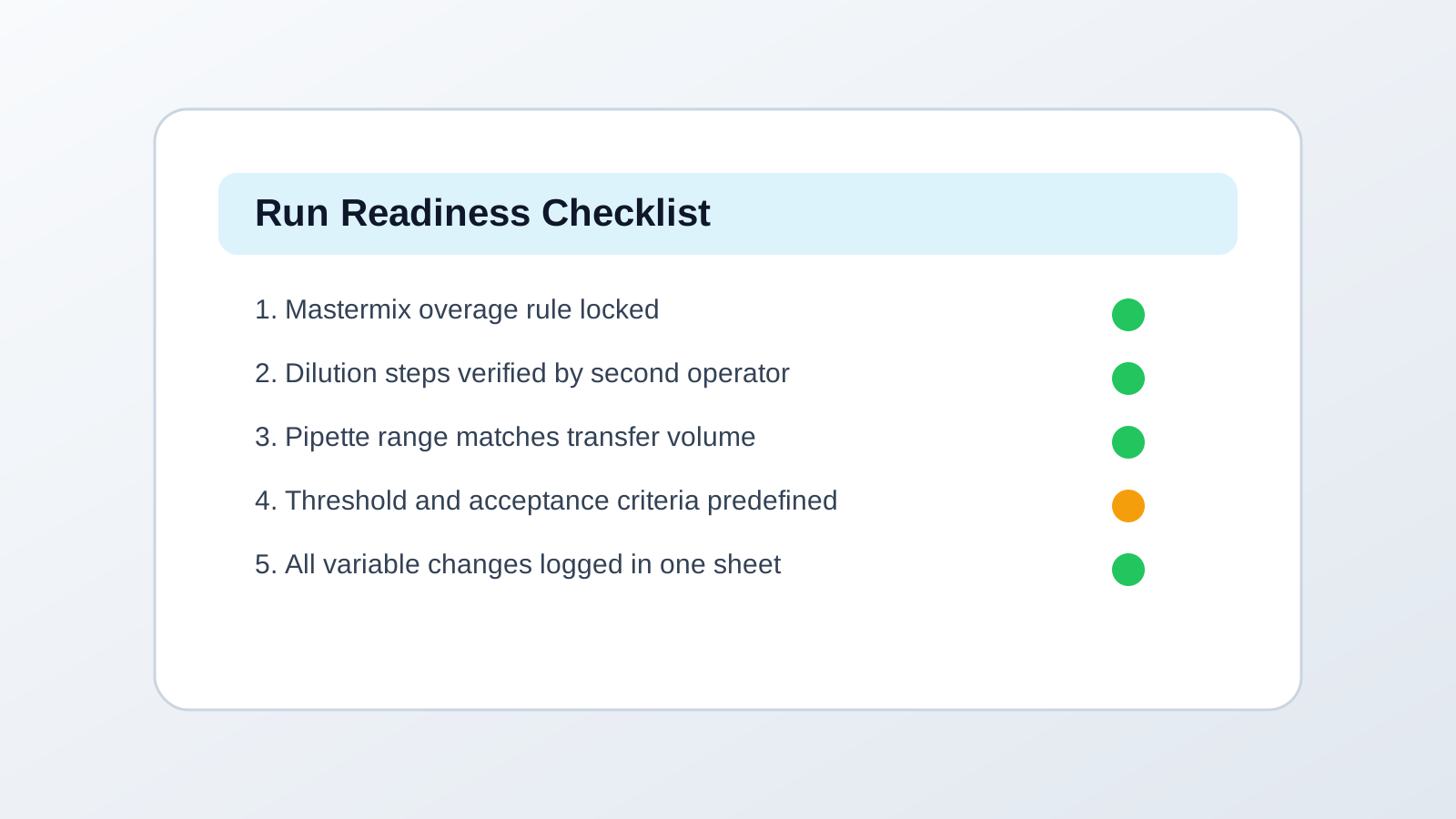
- Confirm target reaction volume first.
- Lock concentrations before touching a pipette.
- Calculate per reaction, then multiply by N+1.
- Pre-label tubes to avoid order mistakes.
- Keep a single source of truth for volumes.
When you need repeatable math, use the PCR Mastermix Calculator. If your setup includes dilution steps, pair it with the Serial Dilution Visualizer. For reproducibility controls, this qPCR playbook is a useful companion.
Pro Tip: If two operators follow two different prep orders, your variance starts before the thermocycler starts.
Eliminate PCR Volume Guesswork
Use our PCR Mastermix Calculator to auto-apply N+1 logic and get a clean, ready-to-pipette recipe in seconds.
Have your own mastermix failure pattern? Share it in the comments and I can map a tighter setup workflow for your next run.