Optimizing PCR Annealing Temperature: A Practical 2026 Bench Playbook
Most failed PCRs are not caused by bad polymerase. They fail because annealing temperature is chosen once and never stress-tested. If you keep getting weak bands or non-specific smears, this is likely your bottleneck.
3 SEO Title Options You Can Test
- 8 Annealing Temperature Mistakes That Break PCR Specificity
- 2026 PCR Optimization Guide: 7 Steps to Find the Right Ta Fast
- PCR Gradient Strategy: 9 Actions to Cut Smears and False Bands
3 Personal Experiences from Real Troubleshooting
1) The "Textbook Ta" That Failed in Real Life
I once used Tm minus five by default for a new primer pair. The gel showed multiple off-target bands. A quick gradient run revealed a much cleaner band two degrees higher.
2) Good Primers, Bad Handling
Another project looked like a temperature issue. The real problem was inconsistent pre-PCR handling and warm bench setup. When we standardized setup on ice, band clarity improved immediately.
3) The Overlooked Primer Pair Mismatch
A team had forward and reverse primer Tm values too far apart. No single Ta worked consistently. We redesigned one primer, reran gradient PCR, and recovered specificity.
Pro Tip: Start with a gradient even when your formula looks correct. One plate of gradient data saves multiple blind reruns.
Quick Decision Table for Ta Optimization
| Signal on Gel | Likely Cause | Immediate Adjustment | Supporting Tool |
|---|---|---|---|
| No visible target band | Ta too high | Lower Ta by 1-3 deg C | PCR Mastermix Calculator |
| Multiple non-specific bands | Ta too low | Increase Ta by 1-3 deg C | qPCR reproducibility guide |
| Strong primer dimers | Primer design or warm setup | Run on ice, validate primers | Serial Dilution Visualizer |
| Variable replicate intensity | Setup inconsistency | Standardize order and timing | PCR Mastermix Calculator |
A Faster Workflow You Can Reuse
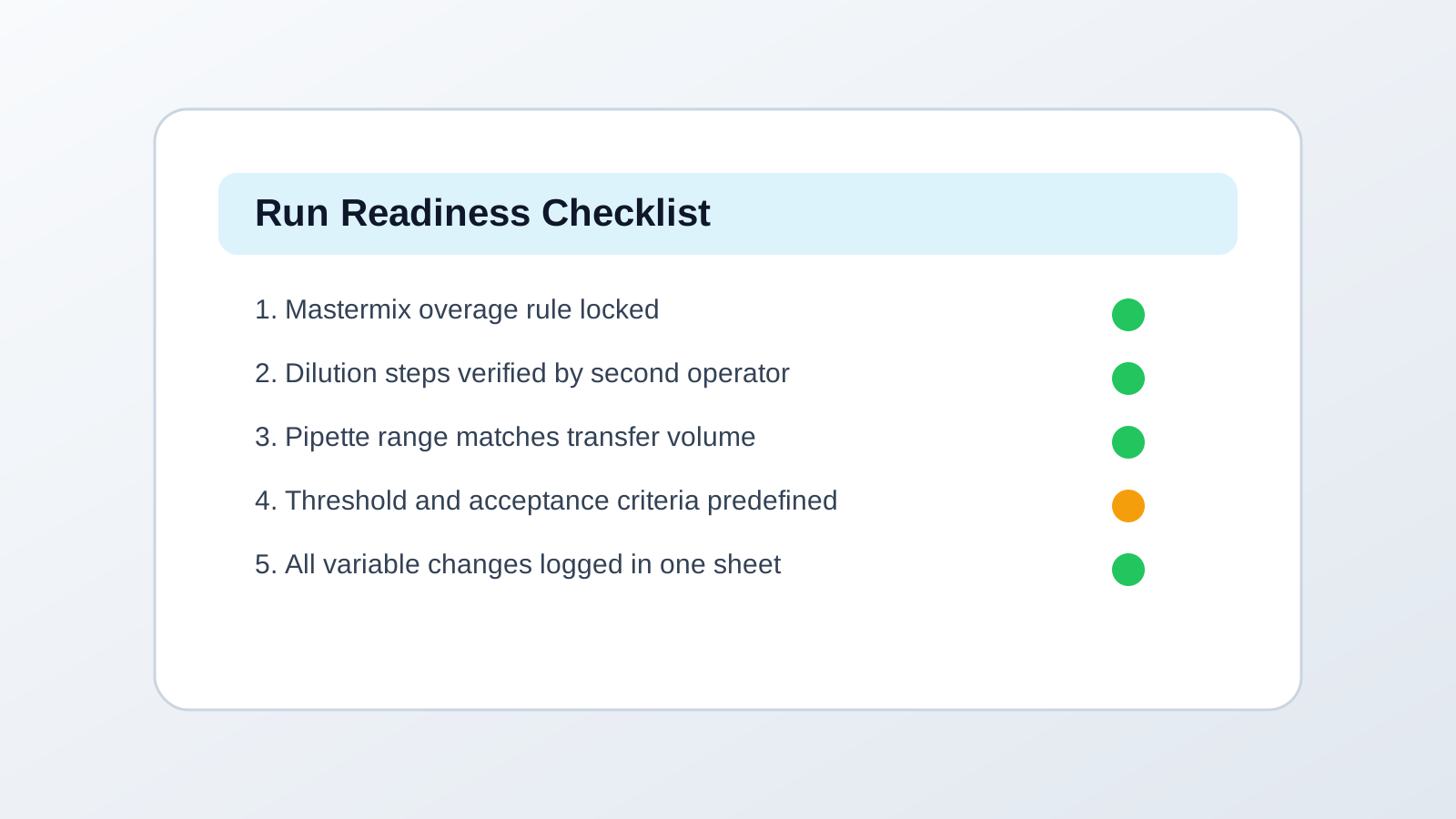
- Check both primer Tm values with one method.
- Start with a gradient range around expected Ta.
- Lock one setup order for every operator.
- Keep all pre-PCR handling conditions consistent.
- Document the final Ta and keep it in the SOP.
Pro Tip: If three people use three setup rhythms, your Ta optimization data will never be clean.
Stabilize PCR Setup Before Temperature Tweaks
Use the PCR Mastermix Calculator to remove volume variability, so your annealing optimization reflects biology, not setup noise.
If you are stuck between two annealing temperatures, post your symptoms in the comments and I can suggest a sharper test plan.